
Tutorials
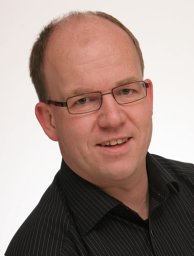
Jens Harting
Helmholtz Institute Erlangen-Nürnberg (HI ERN), Germany
Expert in complex fluids, thin films, and computational simulation for renewable energy applications.
Jens Harting
Helmholtz Institute Erlangen-Nürnberg (HI ERN), Germany
Prof. Dr. Jens Harting is Head of the Research Department Dynamics of Complex Fluids and Interfaces at the Helmholtz Institute Erlangen-Nürnberg for Renewable Energy (HI ERN), where he leads advanced research on simulation and modeling techniques for complex fluid systems and thin-film manufacturing technologies. His research focuses on the development of computational and theoretical approaches for printing and coating processes aimed at optimizing the production of high-performance solar cells and electrocatalytically active thin films. His work combines fluid dynamics, soft matter physics, statistical mechanics, and materials science to address fundamental and applied challenges in renewable energy technologies. Prof. Jens Harting has made significant contributions to the modeling and simulation of structure formation processes occurring during printing, drying, and post-processing stages. His research encompasses wetting and spreading phenomena of liquids, dispersions, and emulsions through thin-film equations and mesoscale simulation methods, as well as the rheological behavior of highly filled dispersions. A major aspect of his work involves the application of statistical mechanics to understand the dynamic evolution of interactions between molecules and nanoparticles, which govern aggregation, self-organization, and the rheological properties of complex thin films. His investigations also include coupled heat and mass transfer processes during deposition and drying, with particular emphasis on defect generation and crack formation mechanisms. In addition, Prof. Jens Harting studies the influence of post-processing treatments on defect states under various environmental conditions, contributing to the development of more reliable and efficient functional materials for energy applications. Through his interdisciplinary research activities, Prof. Harting has established himself as a leading scientist in the fields of complex fluids, thin-film physics, and computational materials engineering, fostering innovative solutions for next-generation renewable energy technologies.
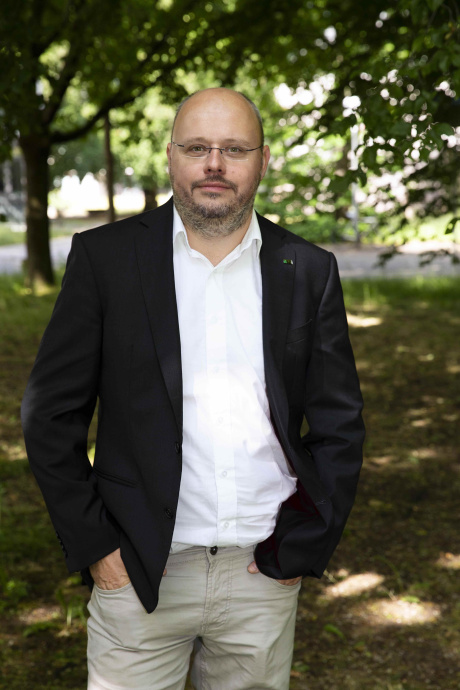
Marcus J. Krause
Karlsruhe Institute of Technology (KIT), Germany
Expert in lattice Boltzmann methods, high-performance computing, and CFD.
Marcus J. Krause
Karlsruhe Institute of Technology (KIT), Germany
Dr. Krause is head of the Lattice Boltzmann Research Group (LBRG) at Karlsruhe Institute of Technology (KIT), Germany, and the initiator and main author of OpenLB, one of the most widely used open-source C++ libraries for 2D and 3D fluid flow simulation with the lattice Boltzmann method. His research spans applied mathematics, high-performance computing, computational fluid dynamics, and PDE-constrained optimization, with longstanding contributions to LBM development and scientific computing.
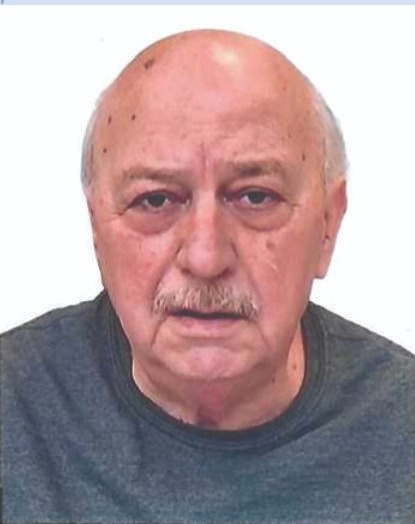
Paulo Cesar Philippi
Pontifical Catholic University of Paraná (PUCPR), Brazil
Pioneering researcher in kinetic methods, thermofluids, and lattice Boltzmann methods.
Paulo Cesar Philippi
Pontifical Catholic University of Paraná (PUCPR), Brazil
Prof. Paulo Cesar Philippi is a distinguished Brazilian researcher in the fields of Thermofluid Sciences, Computational Fluid Dynamics, and Kinetic Methods. He earned his degree in Mechanical Engineering from the Federal University of Santa Catarina in 1973, followed by a Master’s degree in Aerospace Engineering and Technology from the National Institute for Space Research in 1975, and a Ph.D. in Fluid Thermophysics from the University of Provence in 1980. From 1975 to 2016, he served as faculty member at the Department of Mechanical Engineering of the Federal University of Santa Catarina, becoming Full Professor in 1993. He currently holds the position of Full Professor at the Pontifical Catholic University of Paraná. Prof. Paulo Cesar Philippi has played a pioneering role in the development of advanced courses in Thermodynamics, Porous Media, and Kinetic Methods in Fluid Mechanics at both undergraduate and graduate levels. His research activities are centered on multidisciplinary problems at the frontier of science, requiring rigorous physical modeling and mathematical formulation. Since 1997, he has been actively engaged in the theoretical development of discrete forms of the Boltzmann equation and advanced lattice Boltzmann methods. He has authored or co-authored more than 200 peer-reviewed journal and conference publications and supervised approximately 80 graduate and undergraduate research works, including Ph.D. theses and Master’s dissertations. Prof. Paulo Cesar Philippi is also a member of the International Scientific Committee of the annual Discrete Simulation of Fluid Dynamics Conference (DSFD), recognized worldwide as one of the leading forums for researchers working on cutting-edge developments in discrete and kinetic approaches to fluid dynamics. His current research project focuses on phase transition phenomena and immiscible displacement processes in microcavities and porous media. This long-term research line, developed over nearly three decades, involves the numerical simulation of complex multiphase flows through the development of high-order lattice Boltzmann models, addressing discretization challenges and fluid-fluid and fluid-solid interaction mechanisms in microgeometries.
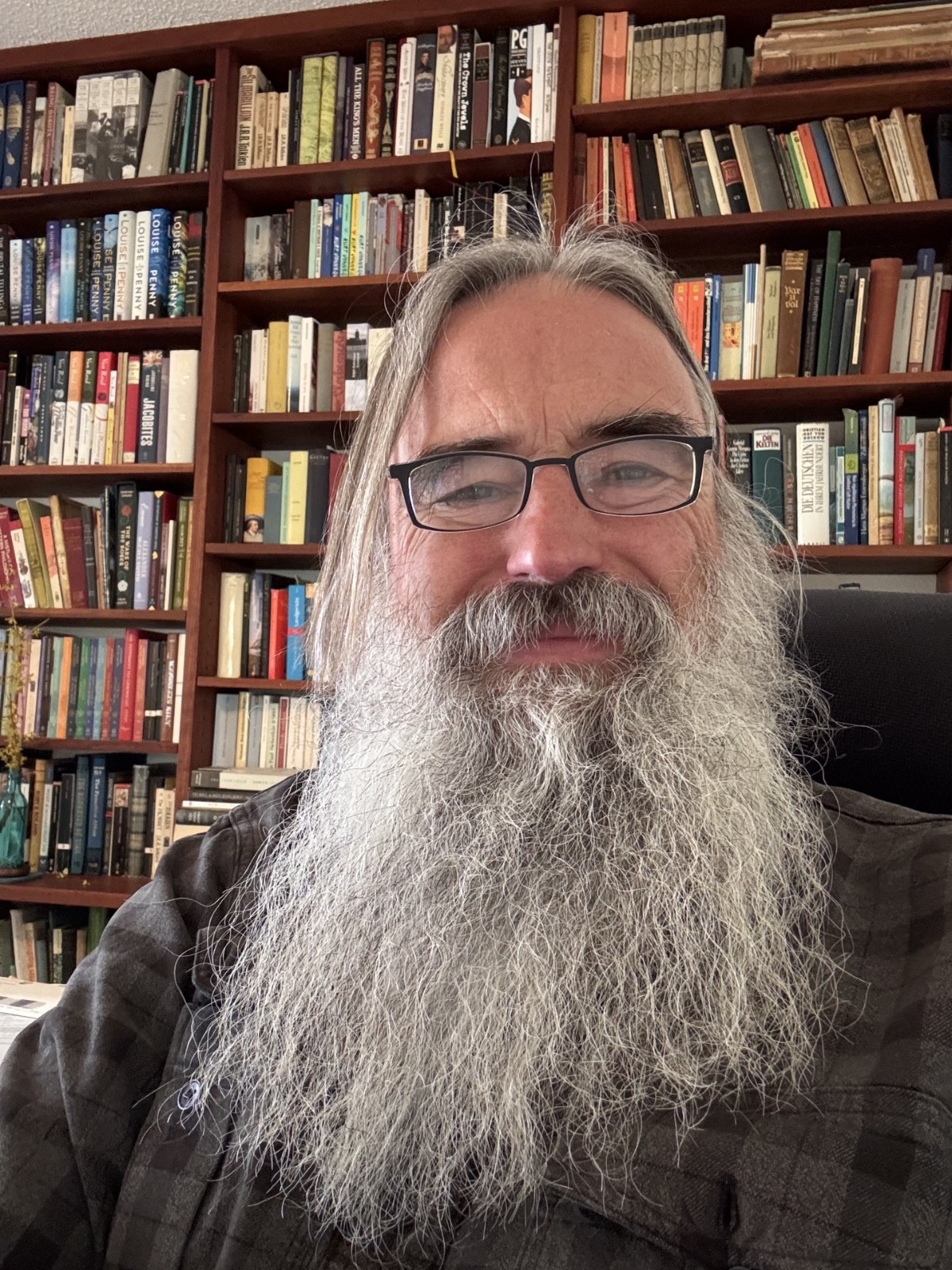
Carsten Alexander Johannes Heinrich Wolf Wagner
North Dakota State University, USA
Theoretical and computational physicist focused on CFD and the lattice Boltzmann method.
Carsten Alexander Johannes Heinrich Wolf Wagner
North Dakota State University, USA
Carsten Alexander Johannes Heinrich Wolf Wagner is a theoretical and computational physicist with extensive experience in fluid dynamics and numerical methods. He earned his D.Phil in Physics from the University of Oxford in 1997, establishing a strong foundation in mathematical and physical modeling. Following his doctorate, he held a postdoctoral position at the Massachusetts Institute of Technology (1997–2000) in Materials Science, and subsequently at the University of Edinburgh (2000–2002) in Physics. Since 2002, he has been a faculty member in Physics at North Dakota State University, where his research focuses primarily on computational fluid dynamics (CFD), with particular emphasis on the lattice Boltzmann method. In addition to his academic work, Wagner has played an active role in the international scientific community, serving as a member of the scientific committee of the Discrete Simulation of Fluid Dynamics since 2008 and as an editor of Physical Review E from 2013 to 2025. His contributions have significantly advanced computational approaches for simulating complex fluid systems, including multiphase flows and microscale phenomena.